
From the very first motorised airships, a debate arose about the future of flight – which would prevail, heavier-than-air or lighter-than-air aircraft? During the First World War, aeroplanes became the dominant form of transport, and the Hindenburg fire in 1937 sealed the fate of airships.
Nevertheless, at the beginning of the 20th century, aerostats were hugely popular with the public in many countries, particularly in Germany under the impetus of Ferdinand von Zeppelin.
Toy manufacturers began offering mechanised airships that flew on a string.
In Germany
Günthermann
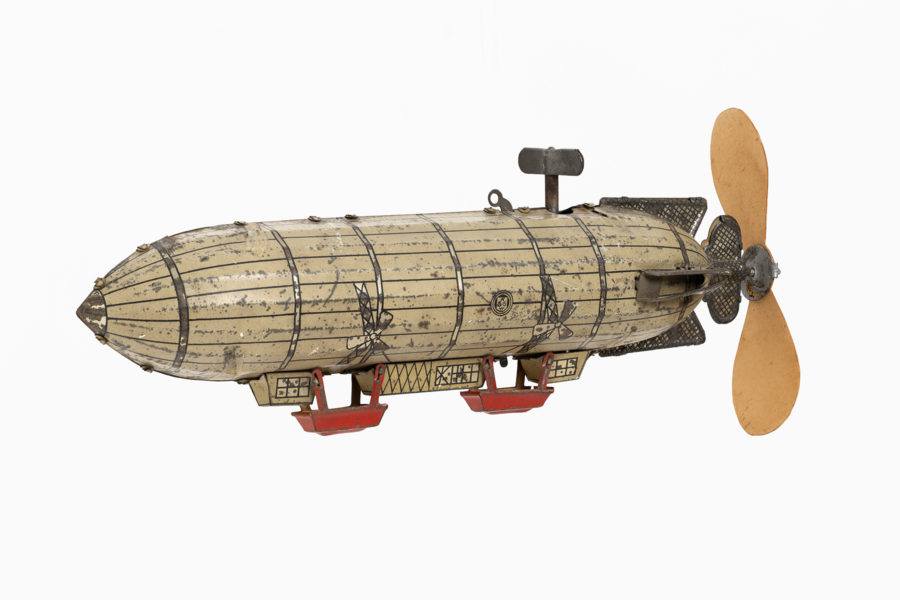
11908, lithographed sheet metal, spring mechanism, rotating propeller, 4.5 x 24 cm
Wahnschaffe
Das lenkbare Luftschiff
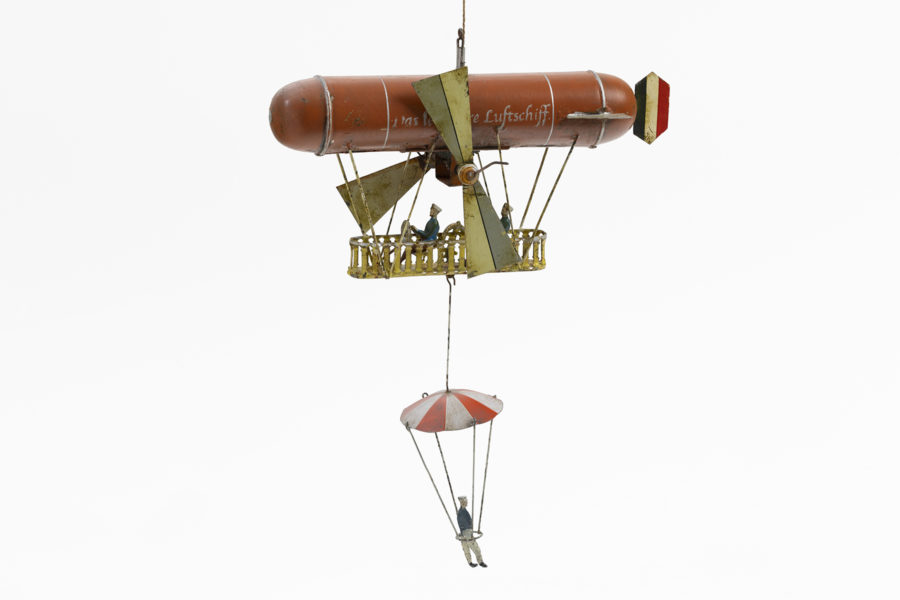
1909, painted sheet metal, gravity-powered, crank handle, descends along the string, h: 20, 27.5 cm
Dirigeable
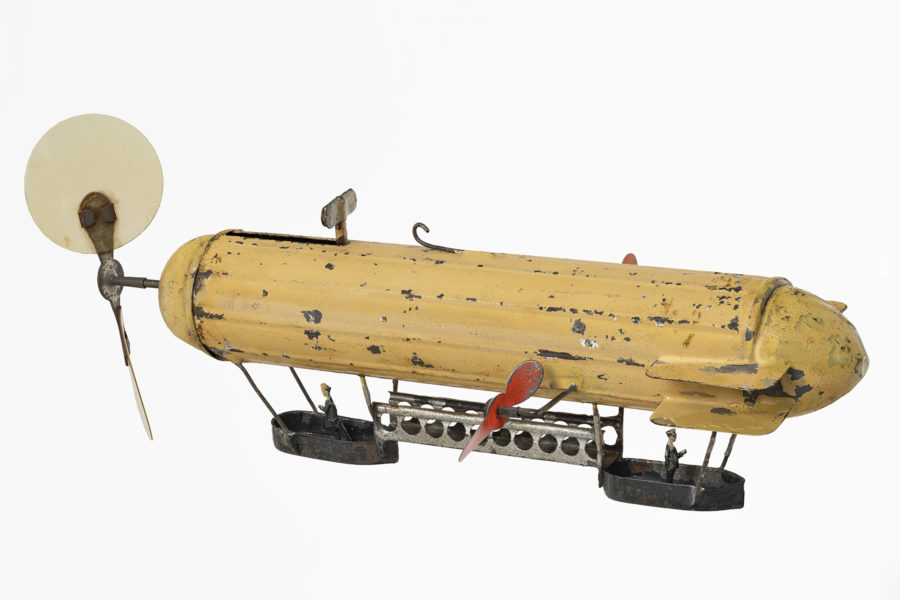
1909, painted sheet metal, spring mechanism, propeller rotates, 11 x 23.5 cm
In France
Unknown Manufacture
REPUBLIQUE
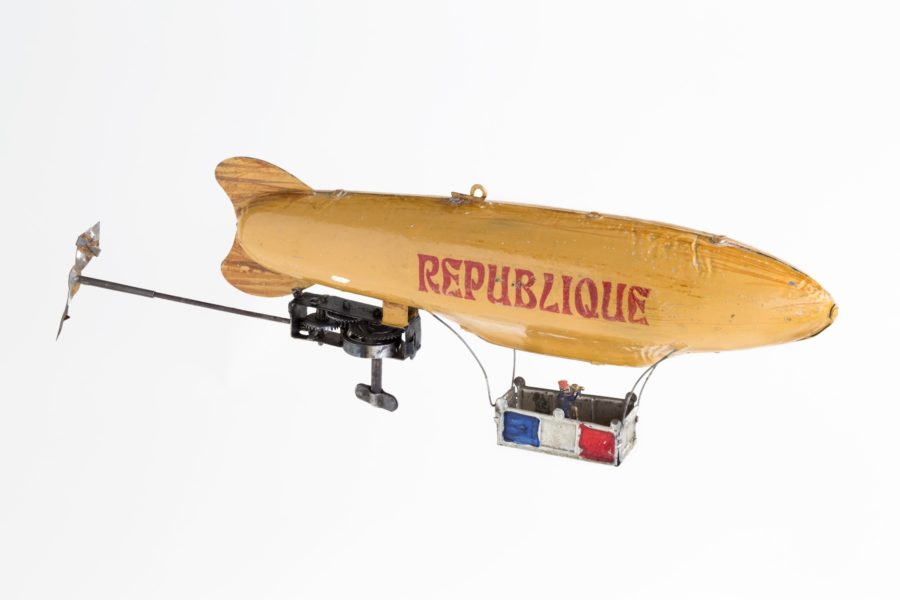
1910, painted sheet metal, clockwork mechanism, propeller rotates, 30 x 5 cm
In Japan
Toyodo
Nobori
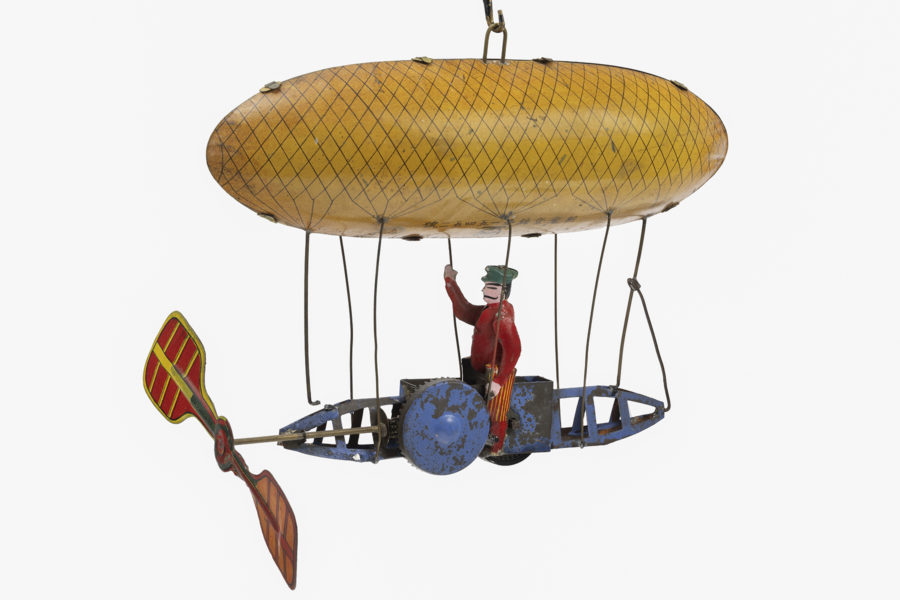
Late 1910s, lithographed and painted sheet metal, clockwork mechanism, rotating propeller, h: 31 cm, 57 x 57 cm